
Intelligent Linear Actuator Control System for Chair Lifting Applications
01. Devoforge Expertise
At Devoforge, we specialize in full-cycle embedded systems engineering, combining electronics design, firmware development, mechanical integration, and production-ready product development.
For Enhansit, a company focused on improving mobility and comfort through powered furniture solutions, we delivered a complete Intelligent Linear Actuator Control System for chair-lifting applications. The product is marketed under the Enhansit brand and distributed via liftmychair.com.
This project was not limited to PCB development or firmware coding. It required complete system-level engineering including:
- Custom electronics hardware design
- Embedded firmware development
- Encoder-based motion control
- 3D enclosure design
- Mechanical integration
- User interface development
- Safety-focused engineering logic
Our expertise ensured that the final system was safe, reliable, user-friendly, and scalable for production.
02. Client Requirements
Enhansit’s vision was to develop a safe, reliable, and intuitive chair lifting system designed for daily use by individuals with limited mobility.
The system needed to:
- Deliver precise and repeatable actuator movement
- Allow customizable lift height for different users
- Prevent overextension and mechanical stress
- Retain configuration settings after power loss
- Operate quietly for home environments
- Provide a simple, non-complex interface suitable for elderly users
- Remain robust under varying load conditions
- Be manufacturable and serviceable at scale
Since chair-lifting systems operate in safety-critical environments, unexpected movement or over-travel could cause discomfort, injury, or equipment damage. Therefore, reliability and safety were top priorities.
03. Proposed Solution
We proposed a smart microcontroller-based actuator control system built around a custom-designed controller PCB and a wired remote interface.
The system architecture included:
- Custom microcontroller control board
- 24V DC high-force linear actuator
- Encoder-based position feedback
- User-adjustable potentiometer for lift height
- EEPROM-backed non-volatile memory
- Safety-focused motion logic
- Custom mechanical housing
This architecture ensured predictable motion, configurable lift limits, and long-term operational stability.
04. Implemented Solution
We engineered and delivered a fully integrated actuator control platform that transformed a basic linear actuator into an intelligent motion-controlled lifting system.
The final system integrated:
- Main controller PCB with AC to DC power conversion
- Motor driver outputs for controlled extension and retraction
- Real-time encoder feedback processing
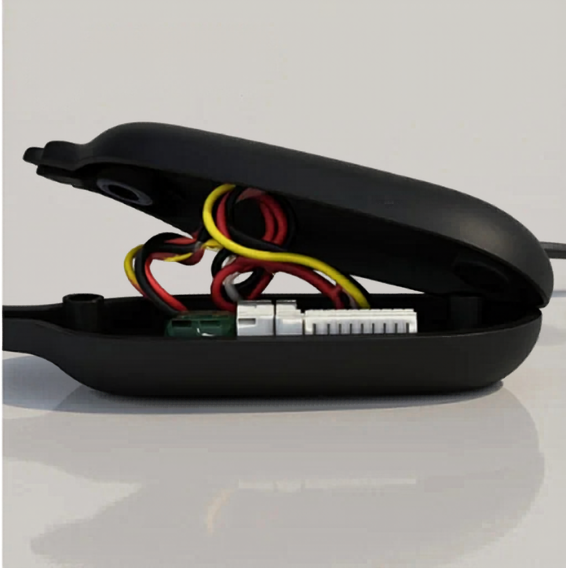
- Remote control with tactile buttons and potentiometer
- Calibration system with persistent memory
- Custom 3D enclosure for durability
The system provides smooth, controlled lifting motion with minimal operational noise, fully suitable for home furniture applications.
05. Our Process
Our development process followed a structured engineering approach:
Detailed review of safety needs, user behavior, and mechanical constraints.
Defining control logic, hardware structure, and feedback mechanisms.
Developing custom PCB and validating motor control circuitry.
Implementing motion tracking, safety logic, and EEPROM data retention.
Designing protective housing and mounting structure
Functional, load, and power-interruption testing.
Ensuring manufacturability and scalability.
This structured approach ensured a production-ready, reliable solution.
06. 3D Enclosure Design
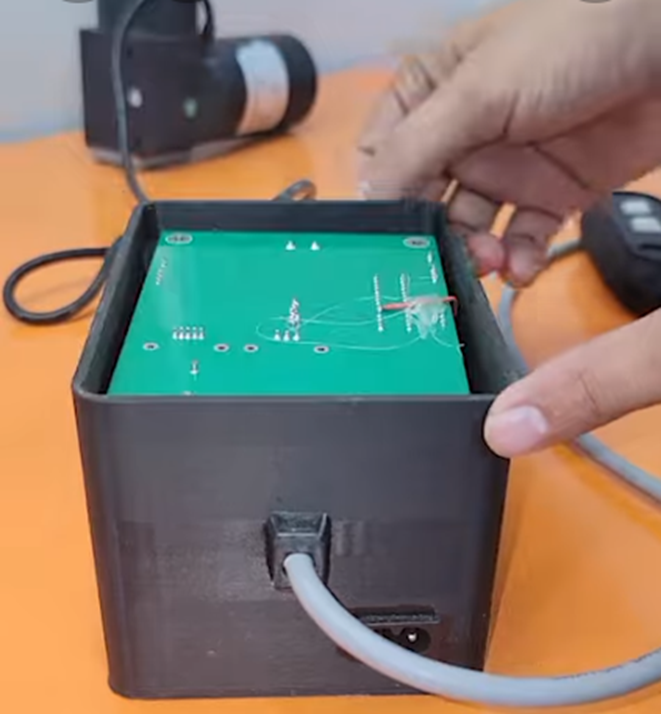
A custom 3D-printed enclosure was developed to house the electronics securely within the chair structure.
Key design features included:
- Protection against dust and accidental contact
- Ventilation considerations for thermal management
- Easy access to connectors and calibration switch
- Clean internal cable routing
- Professional product-grade aesthetics
- Structural support to prevent vibration-related failures
Mechanical integration was carefully engineered to prevent cable strain and misalignment with the actuator mechanism.
07. Circuit Design
At the core of the system lies a custom-designed main controller PCB.
Key technical highlights:
- Integrated AC (100–240V) to 24V DC power conversion
- High-current motor control outputs
- Encoder signal conditioning circuitry
- Protection mechanisms against overload and misuse
- Noise-reduction optimized PCB layout
- Thermal performance optimization
- EEPROM-backed configuration storage
The PCB was designed not only for performance but also for manufacturability and long-term reliability across production units.
08. Challenges
Several engineering challenges were addressed during development:
- Ensuring precise position tracking under varying load conditions
- Preventing actuator over-travel in safety-critical applications
- Maintaining configuration data after unexpected power loss
- Achieving quiet motor operation suitable for residential use
- Designing a simple interface for non-technical users
- Ensuring scalability for mass production
These challenges required careful integration of hardware, firmware, and mechanical systems.
09. Revisions
Throughout development, multiple refinements were implemented:
- Firmware tuning for smoother motion control
- Encoder feedback calibration improvements
- Enhanced safety cut-off logic
- PCB layout refinements for thermal stability
- Mechanical enclosure adjustments for easier installation
- Remote interface improvements for better tactile response
Each revision enhanced reliability, usability, and long-term durability.
10. Final Version (Result)
The final product delivered to Enhansit was a fully integrated intelligent lifting system ready for real-world deployment.
The system successfully achieved:
- Smooth and predictable lifting motion
- Accurate position tracking across full stroke
- Enforced user-defined lift limits
- Immediate stop when control buttons are released
- Stable operation under varying loads
- Safe recovery after power interruptions
- Intuitive operation requiring no technical training
The result was a scalable electronics platform that enhances product quality, user comfort, and safety.
Enhansit now offers a dependable, configurable lifting system aligned with modern furniture mobility solutions.
11. Future Upgrades
The platform is designed with scalability in mind. Potential future enhancements include:
- Wireless remote control (Bluetooth / RF)
- Mobile app integration
- Load sensing and predictive maintenance alerts
- Cloud-based diagnostics
- Touch-enabled display interface
- Modular firmware for beds, recliners, and medical furniture
- Expansion for medical device compliance standards
The architecture supports product line expansion without fundamental redesign.
Interested in Similar Project?
At Devoforge, we deliver complete embedded hardware solutions — from concept to production-ready systems.
Whether you are developing:
- Smart furniture systems
- Medical mobility equipment
- Motor control platforms
- Custom actuator solutions
- Embedded electronics products
Our team can help you design, prototype, test, and scale your product with safety, reliability, and user experience at the forefront.
Let’s build your next intelligent hardware product.