
Prototyping, Testing & Validation
Prototyping is where ideas become reality.
Our approach ensures fast iterations, high-quality test results, and true functional validation.
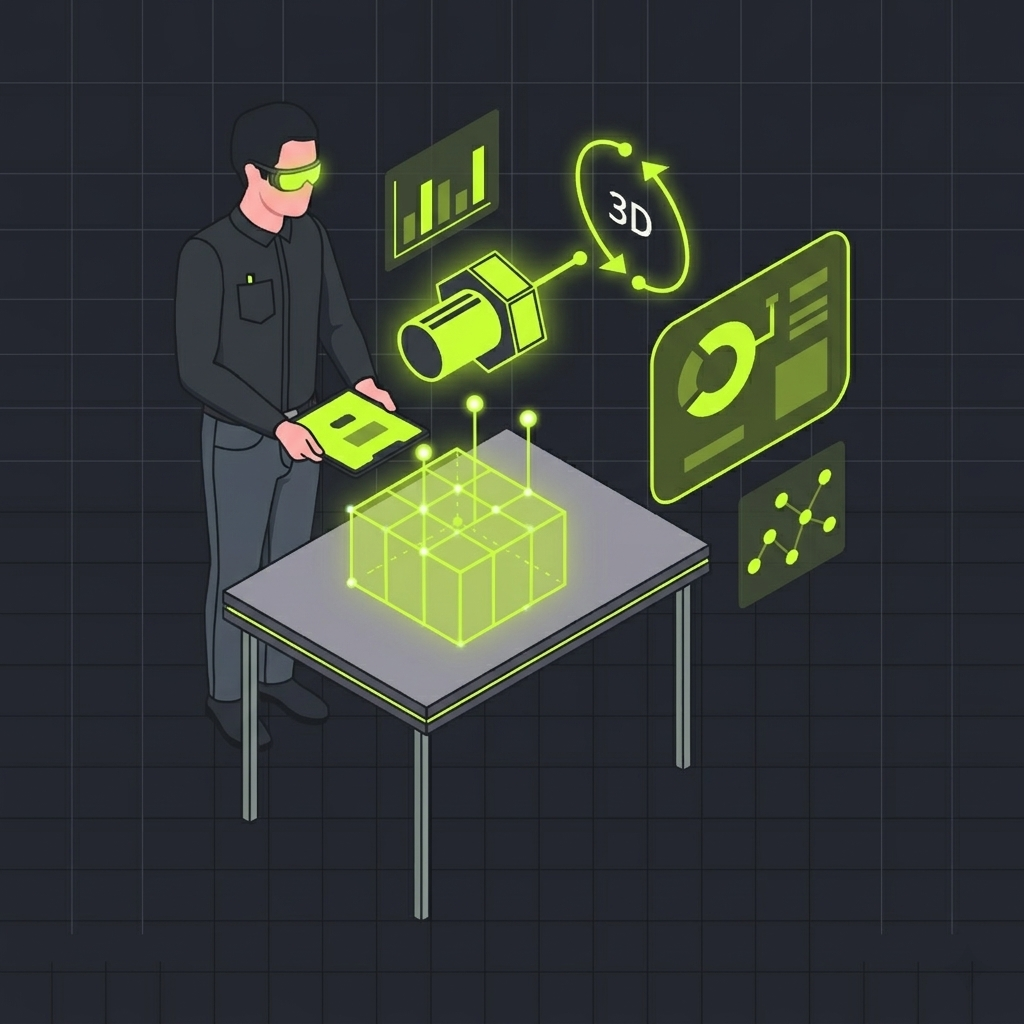
Advanced Breakdown
Rapid Proof-of-Concept Prototypes
We build quick models to test core ideas and reduce technical uncertainty.
These help validate:
• Sensors
• Power requirements
• Communication feasibility
• Mechanical fit
• User experience ideas
Engineering-Grade Prototypes
We then develop near-production prototypes with custom-built hardware, enclosures, firmware, and UI/UX integrations.
Multi-Level Testing & Validation
We follow industry-standard validation cycles:
• Unit testing
• System integration testing
• Performance testing
• Environmental testing
• Reliability testing
• Safety compliance verification
Mechanical & Ergonomic Validation
We test:
• Form factor
• Mounting options
• Weight and balance
• Thermal behavior
• User handling experience
Refinement & Optimization
Each cycle reveals opportunities to improve:
• Speed
• Accuracy
• Power consumption
• Response times
• Connectivity
• Durability
This ensures the final version is polished and ready for manufacturing.
FAQ's
What is the purpose of a proof-of-concept prototype?
A proof-of-concept (PoC) prototype is built to validate core technical assumptions before full development. It helps confirm whether sensors, power systems, communication methods, and basic functionality will work as expected, reducing early-stage risk.
How is an engineering-grade prototype different from a basic prototype?
A basic prototype focuses on feasibility, while an engineering-grade prototype is close to the final product. It includes custom PCBs, optimized firmware, mechanical enclosures, and integrated user interfaces—allowing accurate testing of real-world performance.
What types of testing do you perform on prototypes?
We follow structured validation cycles including unit testing, system integration testing, performance benchmarking, environmental testing, reliability testing, and safety checks. This ensures the system works correctly under both normal and extreme conditions.
Do you test the mechanical design and user experience as well?
Yes. We validate form factor, mounting options, weight distribution, thermal behavior, and overall user interaction. This ensures the product is not only functional but also practical and comfortable to use.
How do you improve the product during prototyping?
Each prototype iteration is analyzed to identify improvements in speed, accuracy, power consumption, response time, connectivity stability, and durability. These refinements ensure the product evolves toward a stable, production-ready design.
Will the final prototype be ready for manufacturing?
Yes. Our goal is to deliver a validated, optimized prototype that can transition smoothly into manufacturing. By the end of the process, key risks are eliminated, and the design is stable enough for production planning and scaling.