
STM32 Cheat Sheets & Quick References
STM32 EMBEDDED DEVELOPMENT RESOURCES
Find practical STM32 references for GPIO, interrupts, UART, I²C, SPI, timers, PWM, ADC, DMA, low-power modes, and other common embedded-development tasks. Browse curated technical resources and quickly reach the documentation you need for your STM32 project.
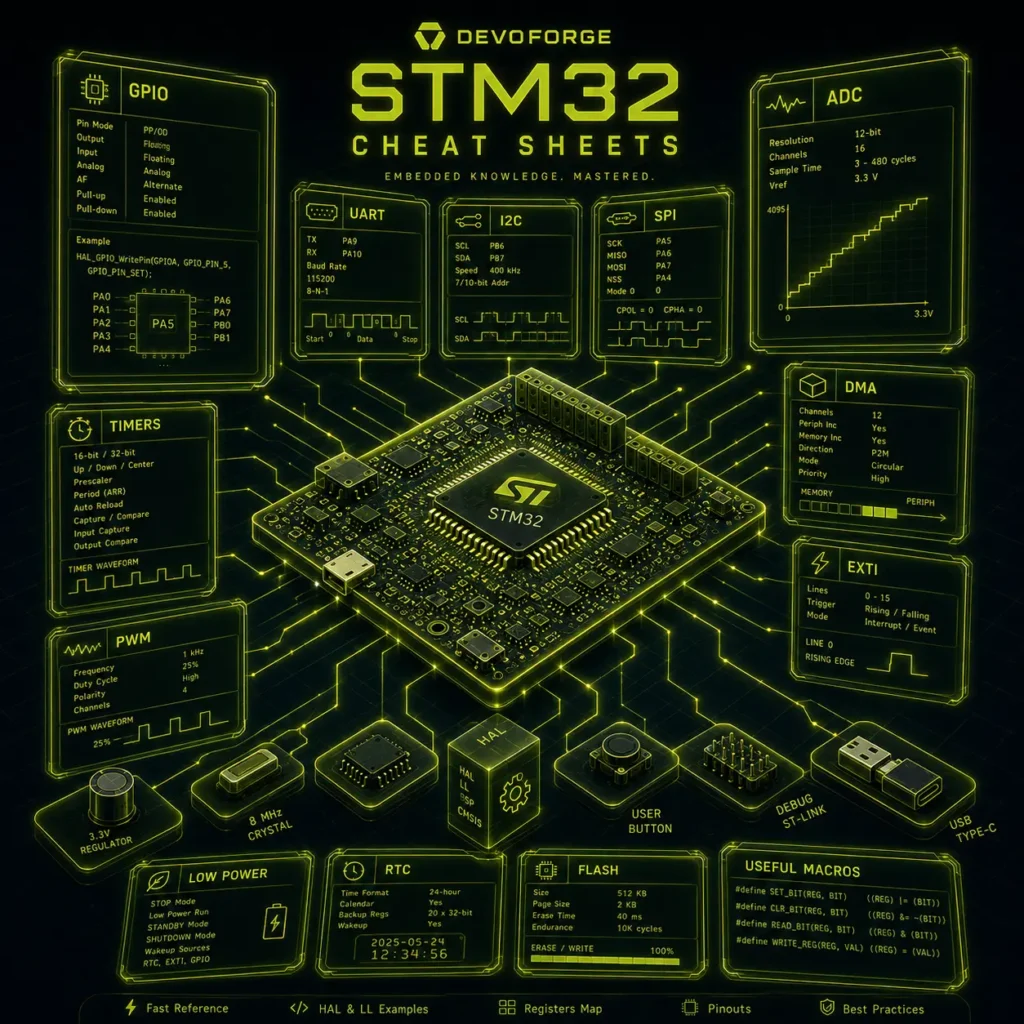
STM32 Cheat Sheets & Quick References
Find official STMicroelectronics references for STM32 GPIO, interrupts, UART, I²C, SPI, timers, PWM, ADC, DMA, low-power modes, RTC, watchdogs and other common embedded-development tasks.
Find the Right STM32 Reference
Search by peripheral, development task, guide type or software focus.
Featured STM32 References
Strong first stops for common STM32 firmware and peripheral-development workflows.
All STM32 Quick References
No matching STM32 resources found
Try removing a filter or searching with a broader development term.
How to Navigate STM32 Documentation
STM32 development is easier when you begin with the exact device, use the correct reference manual and match examples to the STM32Cube package used by your project.
Confirm the Exact STM32 Device
Peripheral instances, pin alternate functions, timers, DMA architecture, analog capabilities and low-power features vary across STM32 families and devices.
Use the Datasheet + Reference Manual
The datasheet tells you what the selected device exposes; the reference manual explains how its peripherals behave. Use both alongside Cube examples and HAL documentation.
Match the Cube Package and HAL Version
Example code and API behavior can differ across STM32Cube firmware packages and newer HAL generations. Verify the version used by your project before copying implementation details.
STM32 Peripherals Are Device Specific
STM32 peripheral names may look familiar across families, but clocks, pin mappings, DMA request routing, timer capabilities, ADC features and HAL implementations can differ. Treat the documentation for your exact device and software package as the source of truth.
Confirm the exact MCU or module part number and package.
Check the datasheet alternate-function and pin-assignment tables before configuring peripherals.
Verify peripheral clocks, DMA mapping and interrupt vectors in the device reference manual.
Match HAL APIs and code examples to the STM32Cube firmware package used by the project.
FAQ's
What are STM32 cheat sheets and quick references?
STM32 cheat sheets and quick references help developers quickly find information about common STM32 peripherals and firmware-development tasks without searching through multiple documentation sections. This directory organizes useful references by topics such as GPIO, UART, timers, ADC, DMA, interrupts, and power management.
Are these STM32 resources created by Devoforge?
The page is primarily a curated directory of technical references. Many of the linked resources come directly from STMicroelectronics, while Devoforge organizes them by development task and adds practical engineering notes to help users choose the right reference.
Are these official STM32 resources?
The directory prioritizes official STMicroelectronics documentation and technical guides where appropriate. Each resource card clearly identifies that the user is opening an external technical reference.
Are the STM32 references free to access?
Most of the technical documentation linked from this directory can be accessed freely from STMicroelectronics. Some development tools, software packages, or additional resources may have their own access or licensing conditions.
What STM32 topics are covered?
The directory includes resources relevant to platforms such as KiCad, Altium Designer, Autodesk Fusion, EAGLE, OrCAD, Allegro, PADS, SOLIDWORKS, and other electronics or mechanical CAD environments.
Can I use downloaded CAD models directly in a production design?
The directory includes references for GPIO, EXTI interrupts, UART, I²C, SPI, timers and PWM, ADC, DMA, low-power modes, RTC, watchdogs, advanced DMA architectures, and other commonly used STM32 peripherals.
Can I use the same STM32 configuration for every MCU?
No. STM32 families and individual devices can differ in peripheral availability, GPIO alternate functions, timers, DMA architecture, clock configuration, ADC features, memory, and other capabilities. Always verify the implementation against the documentation for your exact STM32 device.
Which STM32 document should I check first?
Start by identifying your exact MCU part number. The datasheet is useful for device features, packages, pin assignments, and alternate functions, while the reference manual explains peripheral behavior in greater technical detail. STM32Cube documentation and examples can then help with software configuration and implementation.
Can Devoforge help with an STM32 firmware or hardware problem?
Yes. Devoforge can support STM32 firmware development, peripheral integration, board bring-up, debugging, communications, low-power optimization, embedded architecture, testing, and wider hardware-product development.