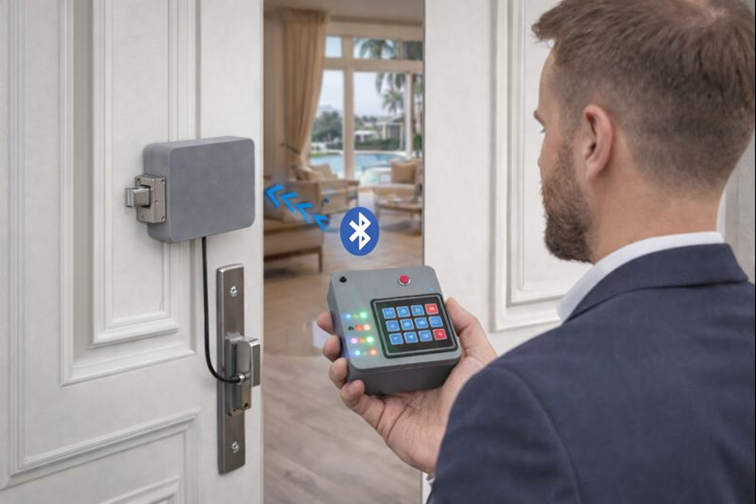
Bluetooth Smart Door Lock System
Devoforge | Product Development & Prototyping Services
01. Devoforge Expertise
At Devoforge, we specialize in complete product engineering solutions — from concept design and embedded firmware development to mechanical prototyping and production-ready hardware systems. This Bluetooth Smart Door Lock System project demonstrates our ability to integrate:
- Embedded systems engineering
- Wireless communication architecture
- Secure access control logic
- Power and battery management design
- Custom PCB development
- 3D enclosure design and rapid prototyping
- End-to-end system integration
Our client, based in the United States, required a secure, wireless, and user-friendly smart locking solution. The goal was not only to develop a functional Bluetooth lock but to engineer a cohesive two-unit system with robust security logic, intuitive user interaction, and reliable mechanical actuation.
This project highlights Devoforge’s capability to transform an idea into a fully assembled, tested, and shipped product ready for real-world deployment
02. Client Requirements
The client approached Devoforge with a clear vision: to build a Bluetooth-enabled smart door lock system that provides secure, wireless access control with modular hardware architecture.
The key requirements included:
- Wireless remote operation of multiple locks via Bluetooth
- Password-based authentication for secure access
- Real-time user feedback through LED indicators
- Separate transmitter (control panel) and receiver (lock controller) units
- Portable, battery-powered transmitter with rechargeable capability
- Reliable solenoid lock actuation via relay control
- Easy-to-use keypad interface
- Stable power management for long operational sessions
The system needed to be scalable and modular, allowing control of multiple locks while maintaining secure validation processes.
03. Proposed Solution
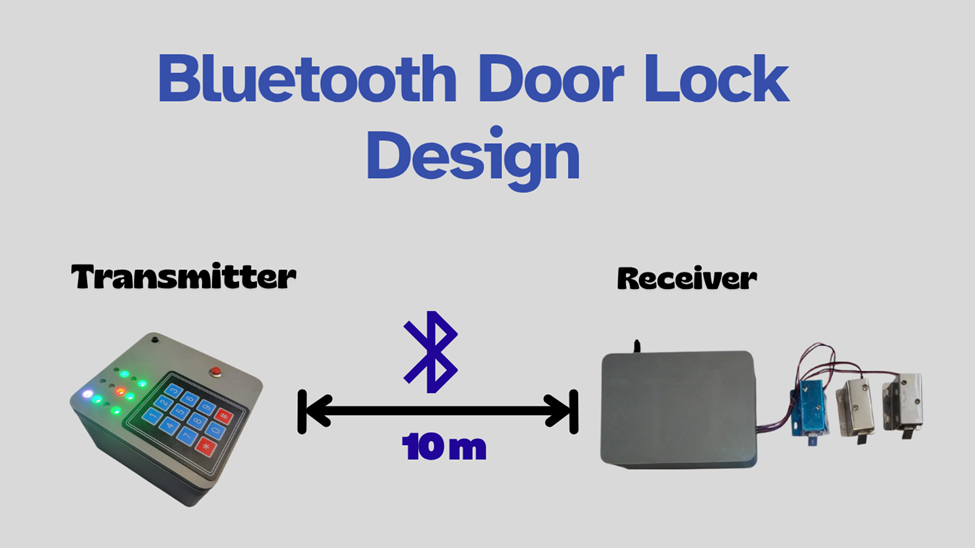
After analyzing the requirements, we proposed a synchronized two-unit system:
Module 1: Transmitter Unit (Control Panel)
A portable keypad-based interface responsible for:
- User interaction
- Password authentication
- Lock selection
- Wireless communication
Module 2: Receiver Unit (Lock Controller)
A stationary controller responsible for:
- Receiving Bluetooth commands
- Driving solenoid locks via relay module
- Managing external 12V DC power
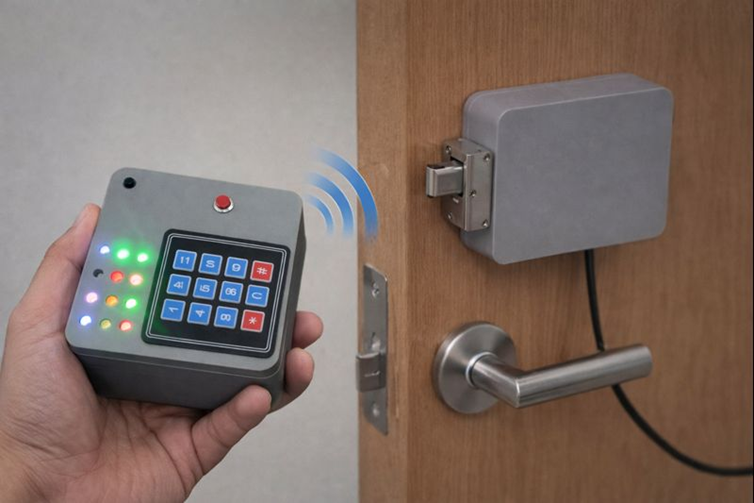
This modular architecture ensured flexibility, scalability, and easier troubleshooting. By separating the user interface from the actuation hardware, the system gained improved reliability and enhanced expandability.
04. Implemented Solution
The final implemented system consisted of two fully functional hardware modules integrated through Bluetooth communication.
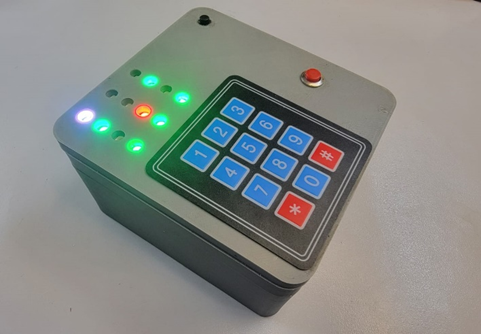
- Transmitter Unit – User Interface & Wireless Control
- The transmitter was built around the Arduino Mega 2560, selected for its higher I/O capability and memory support
- Key Components:
- Arduino Mega 2560
- 4×3 matrix keypad
- WS2812B LED status strips
- HC-05 Bluetooth module
- Two 18650 Li-ion rechargeable cells
- Voltage sensor for battery monitoring
- Power switch and charging circuit
This unit allows users to:
- Select a specific lock
- Enter password credentials
- Receive real-time LED feedback
The LED strips provide clear visual communication:
- Green: Successful password validation
- Red: Incorrect password
- Status lighting for connection and selection
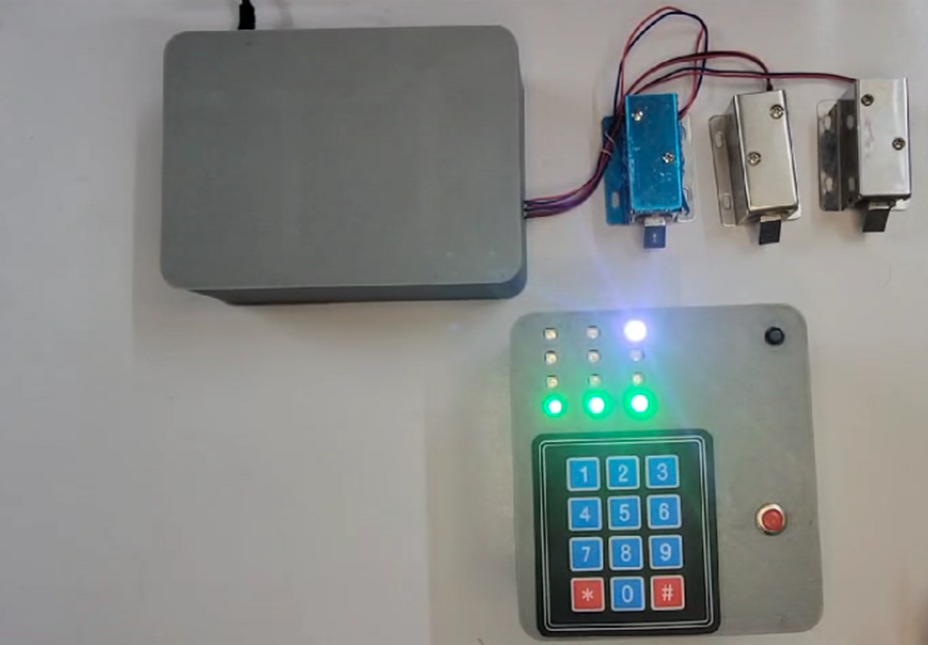
Receiver Unit – Lock Control & Actuation
The receiver unit is based on an Arduino Uno, selected for its reliability and simplicity
Key Components:
- Arduino Uno
- HC-05 Bluetooth module
- 4-channel relay module
- 12V DC external power supply
- Solenoid lock outputs
This unit:
- Receives validated commands via Bluetooth
- Activates the corresponding relay
- Unlocks the selected solenoid mechanism
The 12V external power ensures stable actuation of solenoid locks without overloading control electronics.

05. Our Process
At Devoforge, we follow a structured product development methodology:
Detailed discussion with the client to define system architecture.
Component selection and schematic planning.
Programming using Arduino IDE with custom logic for:
- Bluetooth communication
- Keypad scanning
- Password validation
- LED feedback control
- Relay actuation
Custom 3D enclosure modeling for both modules.
Full system integration and wiring.
Rigorous testing before shipment.
06. 3D Enclosure Design
Mechanical design played a critical role in this project.
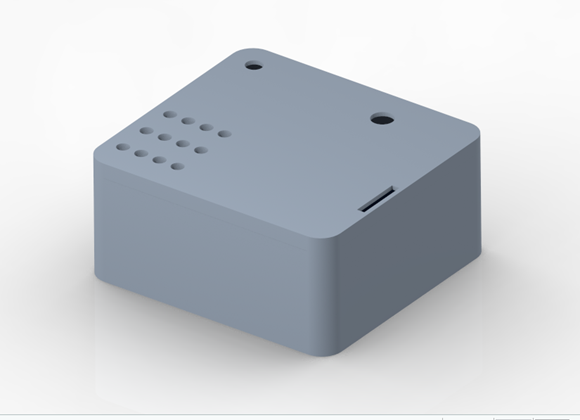
We developed custom 3D printed enclosures for both transmitter and receiver units.
Design Objectives:
- Compact and ergonomic
- Suitable for desk or wall mounting
- Ventilated for airflow
- Easy to assemble and service
- Aesthetic compatibility with smart-home environments
The enclosure protects internal electronics while keeping components accessible for maintenance.
07. Circuit Design
The circuit architecture was carefully engineered for stability and security.
Bluetooth Communication
We integrated the HC-05 Bluetooth module to establish wireless communication between transmitter and receiver
Key advantages:
- Reliable short-range wireless control
- Simple pairing mechanism
- Low power consumption
Password Handling Logic
The firmware supports:
- Keypad scanning with debounce logic
- Credential comparison with stored passwords
- Conditional command transmission
- Error feedback loop
This ensures that only validated credentials trigger lock actuation.
LED Feedback System
WS2812B addressable LED strips provide:
- Connection confirmation
- Lock selection indication
- Password validation feedback
This improves user experience and reduces operational confusion.
Relay & Lock Actuation
The receiver’s 4-channel relay module:
- Controls multiple solenoid locks independently
- Isolates high-voltage 12V circuit from control logic
- Ensures safe actuation
Battery & Power Management
The transmitter uses:
- Two 18650 Li-ion rechargeable cells
- Voltage sensor for battery health monitoring
- USB-based charging circuit
This enables extended operation without frequent recharging — a key usability feature
08. Challenges
During development, we encountered several technical challenges
Stable Bluetooth Communication
Ensuring consistent pairing without standby disconnects required firmware refinement.
Secure Password Validation
Preventing false triggers and maintaining input accuracy demanded careful keypad debounce logic.
Power Management
Balancing battery life with LED and Bluetooth power draw required optimization.
Mechanical Integration
Designing enclosures that fit electronics precisely while allowing ventilation and durability required iterative prototyping.
Each issue was addressed through testing and debug cycles.
09. Revisions
Multiple refinements were made during development:
- Optimized Bluetooth communication timing
- Improved LED status clarity
- Enhanced keypad response accuracy
- Reinforced enclosure mounting points
- Improved relay wiring for long-term reliability
- Battery voltage monitoring calibration
These revisions ensured that the final product was robust and client-ready.
10. Final Version (Result)
After completing development and validation, the final system delivered:
- Stable wireless Bluetooth control
- Secure password-based access
- Independent multi-lock control
- Reliable relay-driven solenoid actuation
- Rechargeable portable transmitter
- Durable 3D printed enclosures
The fully assembled systems were carefully packaged and shipped to the client in the United States
Each shipment included:
- Assembled transmitter and receiver
- Charging accessories
- Documentation
- Validation reports
The client received a ready-to-install smart locking system that met all functional and security requirements.
11. Future Upgrades
The platform was intentionally designed for scalability.
Planned and potential enhancements include:
The architecture supports several future enhancements:
- Mobile app integration (Android & iOS)
- BLE-based encrypted communication
- Cloud connectivity for remote access logs
- Biometric authentication (fingerprint/face recognition)
- Injection-molded enclosure for commercial production
- Certification for regulatory compliance
These upgrades would elevate the product from prototype to commercial-grade smart security platform.
These upgrades could elevate the system into a commercial smart-home security platform.
Interested in Similar Project?
At Devoforge, we transform complex hardware concepts into fully engineered, tested, and deployable solutions.
Whether you require:
- Smart IoT devices
- Embedded systems development
- Wireless control systems
- Custom hardware prototyping
- Secure access control systems
- Product design and development
We are ready to support your innovation journey.