
Robot Jockey Design for
Camel Racing (UAE)
IoT Security · Smart Home · Product Development · Embedded Systems
Developed by Devoforge – Product Design & Embedded Engineering Studio
01. Devoforge Expertise
At Devoforge, we specialize in end-to-end product engineering solutions, combining mechanical design, embedded systems development, wireless communication architecture, and rapid prototyping into fully integrated electromechanical systems.
For this project, our expertise extended across:
- Complete system architecture design
- Mechanical chassis engineering
- Embedded electronics development
- BLDC motor drive system integration
- Long-range wireless communication (LoRa)
- Custom battery pack engineering
- 3D enclosure design and prototyping
- Ethical and regulation-compliant engineering
This project required more than just electronics design — it demanded a deep understanding of mechanical robustness, desert environmental constraints, wireless reliability, and regulatory transparency in a highly scrutinized sport.
02. Client Requirements
Our client, based in the United Arab Emirates, operates within one of the most technologically advanced and regulated camel racing environments in the world
The goal was to design a next-generation robot jockey system to replace traditional human jockeys while improving:
- Safety
- Control reliability
- Ethical transparency
- Race integrity
The client defined several strict and non-negotiable requirements:
- Lightweight yet highly durable mechanical structure
- Long-range and stable wireless communication
- Replaceable battery pack with safe power management
- High-torque motor capable of precise motion
- Audible command system for camel interaction
- Transparent chassis design to discourage illegal practices
- Proven performance in real race conditions
The system also needed to address regulatory concerns regarding unethical practices, including hidden high-voltage shock mechanisms — an issue closely monitored by authorities.
03. Proposed Solution
After detailed requirement analysis, we proposed a modular robot jockey system consisting of:
- Mechanical mounting chassis
- 2500 RPM BLDC motor drive system (12V)
- Replaceable 4S Li-ion battery pack with BMS
- LoRa-based long-range wireless communication (433 MHz)
- Audio command delivery system (walkie-talkie + speaker)
- Embedded control electronics
- Custom 3D printed enclosure
We planned the development in two iterative generations:
- Version 1 – Functional prototype & real-world validation
- Version 2 – Ethical, production-ready, refined model
This phased approach ensured performance validation before large-scale refinement.
04. Implemented Solution
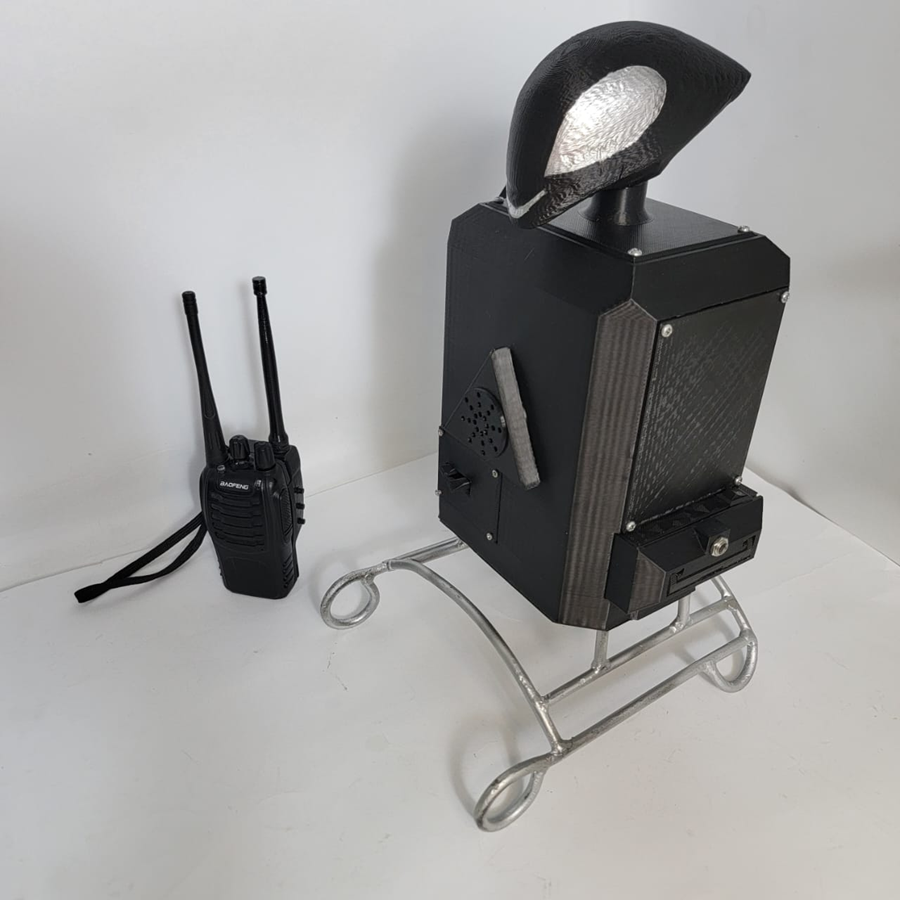
Version 1 focused on mechanical feasibility, wireless stability, and real-world camel testing
It featured:
- Metallic chassis for rigidity
- 12V 2500 RPM BLDC motor
- LoRa communication system
- Replaceable battery architecture
- Audio speaker for command delivery
The metal structure offered excellent strength and allowed rapid development. However, client feedback revealed concerns regarding visual transparency.
Ethical Design Evolution
A major insight emerged from regulatory and ethical considerations. Authorities monitor camel racing to prevent illegal practices such as high-voltage shocks.
To enhance trust and transparency, the client requested a transparent or semi-transparent chassis, ensuring visual inspection capability and eliminating suspicion of hidden electronics
This led to a complete redesign.
Robot Jockey – Version 2 (Field-Ready Model)
Version 2 represented a major advancement in:
- Safety
- Regulatory compliance
- Mechanical durability
- Manufacturability
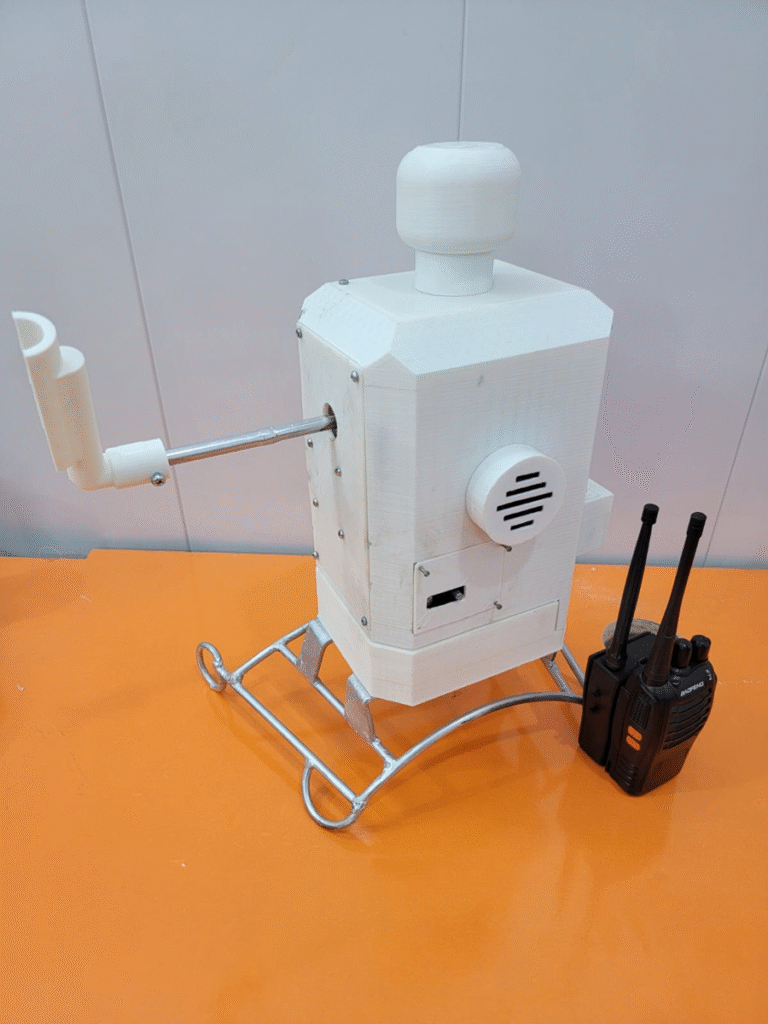
Instead of metal, we implemented a fully 3D printed ABS plastic chassis.
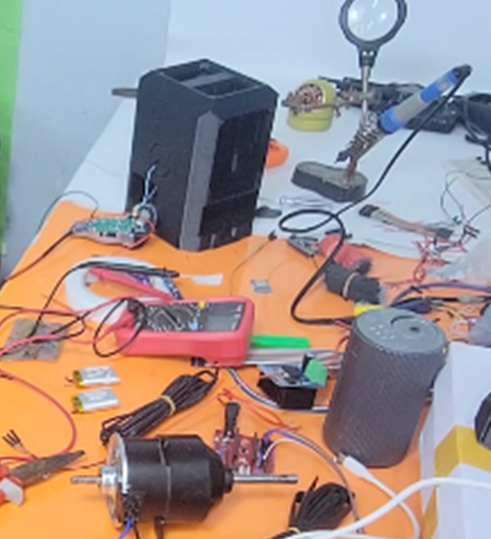
05. Our Process
We followed a structured rapid development cycle:
Both versions underwent extensive real-world validation.
This iterative process ensured that performance improvements were validated under actual racing conditions in the UAE.
06. 3D Enclosure Design
The transition to Version 2 required a complete enclosure redesign.
Material Selection: ABS Plastic
ABS was selected because:
- Higher shock resistance than PLA
- Better thermal stability for desert climate
- Lower electrical conductivity
- Supports semi-transparent fabrication
The fully 3D printed enclosure allowed:
- Rapid iteration
- Custom fitting of components
- Lightweight construction
- Transparent inspection capability
This redesign significantly improved regulatory acceptance and long-term scalability.
07. Circuit Design
Motor System
Both versions utilize:
- 2500 RPM BLDC motor
- 12V operating voltage
The motor was selected based on:
- Torque-to-weight ratio
- Power efficiency
- Desert reliability
- Smooth actuation performance
It provides responsive motion while maintaining energy efficienc
Audio Command System
To communicate commands clearly to the camel:
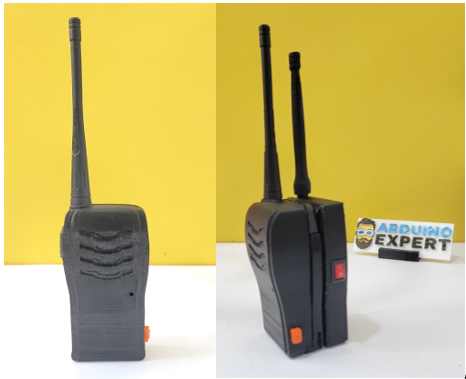
- Baofeng 888S walkie-talkie integrated
- Front-mounted speaker installed
This ensured loud, clear command delivery during races.
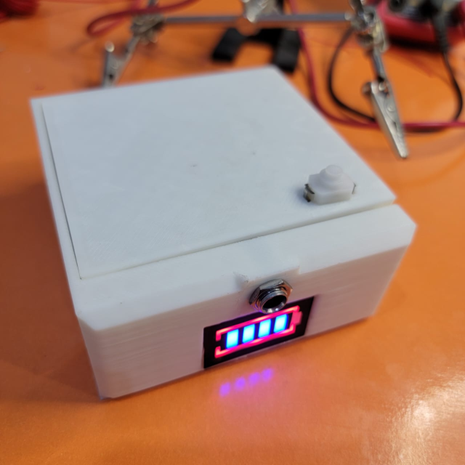
Replaceable Battery Pack (Key Innovation)
The battery system was a critical engineering component.
Architecture:
- 4 × 18650 Li-ion cells
- 4S Battery Management System (BMS)
- Pogo-pin connector interface
- USB Type-C booster for charging
Benefits:
- Safe charge/discharge cycles
- Easy battery swapping
- Vibration-resistant connection
- More than 1 hour of operational runtime
This modular battery design significantly improved serviceability and field efficiency.
08. Challenges
During development, we encountered several engineering challenges:
Ethical Transparency Requirements
Transitioning from metal to transparent ABS while maintaining strength required structural redesign.
Desert Environmental Conditions
High temperatures and dust required careful component selection and mechanical sealing.
Long-Range Communication Stability
Achieving reliable 500+ meter LoRa communication in open race tracks required antenna tuning and field testing.
Mechanical Weight Optimization
Balancing structural strength with minimal weight was critical for race performance.
Each challenge was resolved through iterative prototyping and testing.
09. Revisions
Major revisions between Version 1 and Version 2 included:
- Replacement of metallic chassis with transparent ABS
- Improved internal component mounting
- Enhanced modular battery integration
- Improved assembly accessibility
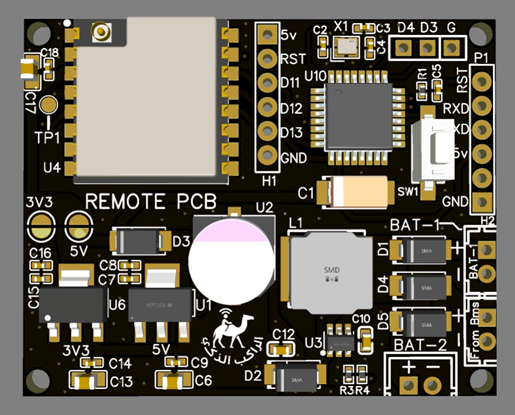
- Refined PCB layout
- Better mechanical stress distribution
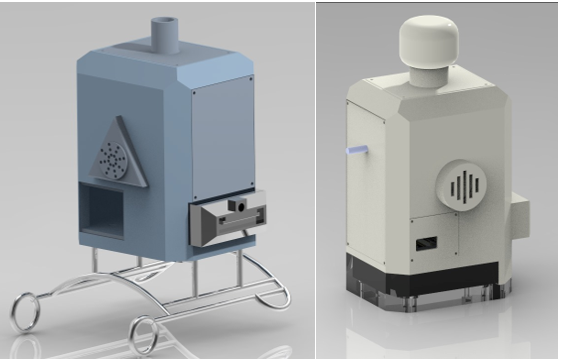
Additionally, rendered CAD visuals were developed for documentation and production discussions.
10. Final Version (Result)
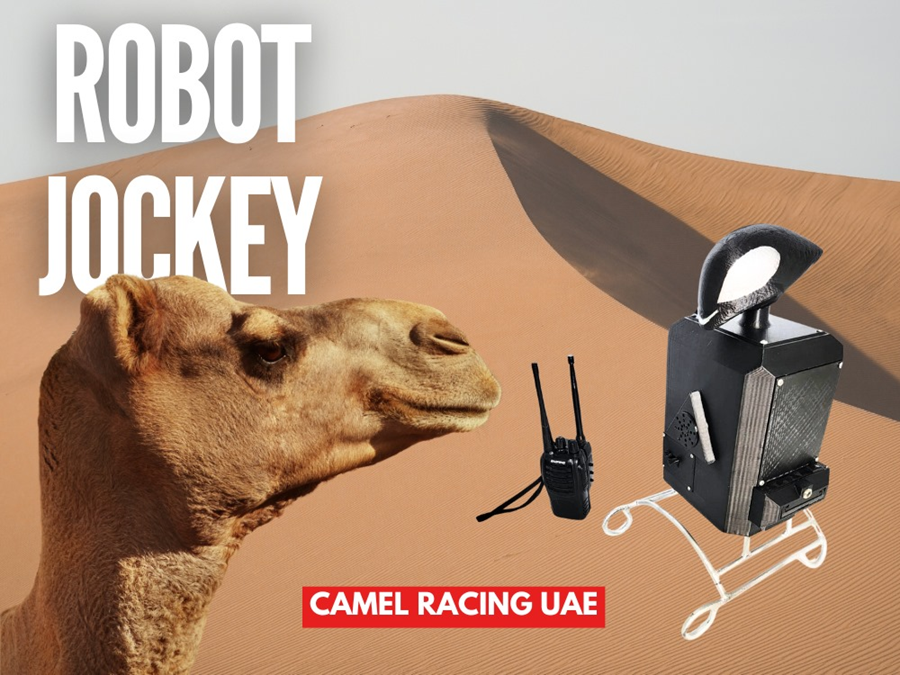
After successful field trials in UAE camel races, the final Version 2 delivered:
- Stable long-range wireless control
- Clear audio communication
- Reliable battery endurance
- Strong mechanical durability
- Positive acceptance from racing officials
Most importantly, the transparent ABS chassis significantly increased regulatory trust and ethical compliance.
The client received:
- Two fully functional generations
- A scalable engineering platform
- Field-proven reliability
This project stands as a benchmark in ethical and performance-focused electromechanical product development.
11. Future Upgrades
The platform has strong scalability potential. Planned enhancements include:
- GPS-based real-time position tracking
- Telemetry feedback (battery level, motor load, signal strength)
- Encrypted communication channels
- Injection-molded chassis for mass production
- AI-assisted motion control optimization
These upgrades will transform the system into a fully intelligent racing assistant platform.
Interested in Similar Project?
At Devoforge, we transform complex ideas into reliable, field-tested electromechanical products.
Whether you require:
- Custom robotics systems
- Industrial embedded systems
- Long-range wireless solutions
- 3D enclosure design & rapid prototyping
- Battery system engineering
- Full product development from concept to deployment
We are ready to partner with you.