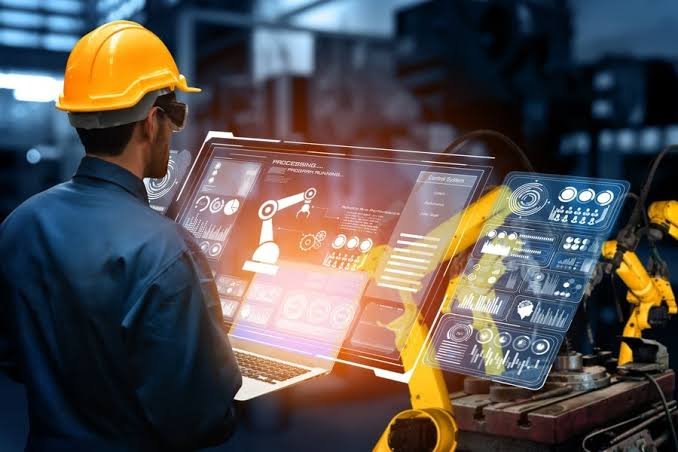
In many factories, warehouses, and production facilities, machines are already doing a lot of the hard work. But having machines is not the same as having a properly connected, efficient, and reliable automation system.
A conveyor may be running, but it may not be communicating with the packaging machine. A sensor may be collecting data, but that data may not be visible to the production team. A machine may stop several times a day, but no one may know the exact reason until production has already been delayed.
This is where an industrial automation system integrator becomes important.
An industrial automation system integrator helps businesses connect machines, control systems, software, sensors, electrical panels, and data platforms into one working system. The goal is simple: make industrial operations faster, safer, more reliable, and easier to manage.
For businesses that want to reduce downtime, improve production quality, modernize old machines, or build a smart factory environment, professional industrial automation integration can make a major difference.
What Is an Industrial Automation System Integrator?
An industrial automation system integrator is a technical partner who designs, connects, programs, and implements automation systems for industrial operations.
Instead of only supplying one machine or one control panel, a system integrator looks at the complete process. They study how machines work, how materials move, how operators interact with equipment, how data is collected, and where delays or errors happen.
Then they build a connected solution using the right combination of hardware, software, electrical controls, sensors, PLCs, HMIs, SCADA systems, and industrial communication networks.
In simple words, the system integrator makes different parts of your operation work together as one complete system.
For example, a factory may have a filling machine, labeling machine, conveyor, weighing unit, and packaging station. If all of these machines work separately, the process may still require too much manual supervision. But with proper automation integration, these machines can communicate with each other, follow a controlled sequence, and provide real-time production data.
What Does Industrial Automation Integration Include?
Industrial automation integration is the process of connecting different machines, systems, and technologies so they can work together smoothly.
This can include:
- PLC programming
- HMI screen development
- SCADA system integration
- Electrical control panel design
- Sensor and actuator integration
- Motor and drive control
- Conveyor automation
- Robotic system integration
- Industrial IoT connectivity
- Machine data monitoring
- Remote equipment monitoring
- Safety system integration
- Legacy machine retrofitting
- Production reporting dashboards
The exact solution depends on the business, industry, existing equipment, and operational goals.
Some companies need a complete automation system from the ground up. Others only need to upgrade old machinery or connect existing equipment with a new monitoring platform. A good integrator does not force one standard solution on every client. They design the system according to the actual process.
Why Businesses Need an Industrial Automation System Integrator
Many businesses try to solve automation problems by buying separate machines or devices. This can work for small upgrades, but it often creates bigger issues later.
The problem is that machines from different manufacturers do not always communicate easily. One machine may use a different controller, another may use a different protocol, and another may have no digital communication at all. Operators may still need to manually transfer data, adjust settings, or monitor equipment one by one.
An industrial automation system integrator solves this problem by creating a connected system.
The benefits include better coordination, fewer manual steps, cleaner data, improved safety, and stronger control over production. Instead of managing separate equipment, the business can manage a complete automated workflow.
This is especially useful for manufacturing plants, warehouses, food processing units, packaging lines, water treatment systems, energy systems, and industrial production facilities.
Key Responsibilities of an Industrial Automation System Integrator
A system integrator does much more than install equipment. Their role usually covers the full automation journey, from planning to testing and support.
1. Understanding the Current Process
Before any automation work begins, the integrator studies the existing operation. This includes machine layout, production flow, operator tasks, safety risks, downtime points, electrical systems, and data requirements.
This stage is important because automation should solve real problems, not just add new technology.
For example, if a production line is slow because material handling is inefficient, the solution may involve conveyor control, sensors, and better sequencing. If downtime is the main problem, the solution may involve monitoring, alarms, and predictive maintenance data.
2. Designing the Automation Architecture
After understanding the process, the integrator designs the automation architecture. This includes deciding which controllers, sensors, communication systems, control panels, software, and interfaces are needed.
A well-planned architecture makes the system reliable and easier to expand in the future.
This stage may include:
- PLC selection
- Control panel layout
- Wiring design
- Sensor placement
- HMI screen planning
- SCADA structure
- Communication protocol selection
- Safety circuit design
- Data logging requirements
Good design at this stage prevents many technical problems later.
3. PLC Programming and Control Logic
PLCs are the brain of many industrial automation systems. A PLC receives signals from sensors, processes the logic, and controls machines, motors, valves, actuators, alarms, and other equipment.
An industrial automation system integrator writes the PLC logic according to the process requirement.
For example, the PLC may control when a conveyor starts, when a motor stops, when a valve opens, when an alarm appears, or when a machine enters safety mode.
Reliable PLC programming is essential because even a small logic error can affect production, safety, or machine performance.
4. HMI and SCADA Development
Operators need a simple way to control and monitor machines. This is where HMI and SCADA systems are used.
An HMI, or Human Machine Interface, is usually a touchscreen or control screen that allows operators to start, stop, monitor, and adjust a machine.
A SCADA system is used for larger operations where multiple machines, processes, or plant areas need to be monitored from one platform.
A good system integrator designs user-friendly screens that are clear, practical, and easy for operators to understand. The goal is not to make screens look complicated. The goal is to give operators the right information at the right time.
5. Electrical Control Panel Design
Electrical automation depends heavily on safe and reliable control panels. These panels may include PLCs, relays, circuit breakers, motor drives, power supplies, terminals, contactors, and communication modules.
A system integrator ensures that the panel is designed properly, wired correctly, and suitable for the industrial environment.
Good control panel design improves safety, reduces maintenance problems, and makes troubleshooting easier.
6. Sensor and Device Integration
Modern automation depends on accurate field data. Sensors are used to detect position, speed, pressure, temperature, weight, level, flow, vibration, and other process conditions.
The integrator selects and connects the right sensors based on the process.
For example, a packaging line may need photoelectric sensors, weight sensors, barcode scanners, and safety sensors. A water system may need pressure sensors, flow meters, and level sensors. A manufacturing line may need proximity sensors, encoders, and machine safety devices.
When sensors are integrated correctly, the system becomes more intelligent and responsive.
7. Machine Communication and Data Integration
One of the most valuable parts of industrial automation integration is data connectivity.
Modern businesses need visibility. They need to know how many units were produced, when a machine stopped, why a fault occurred, how much energy was used, and whether production targets were met.
A system integrator can connect machines to dashboards, databases, cloud platforms, or industrial IoT systems.
This helps managers make better decisions based on real data instead of guesswork.
8. Testing, Commissioning, and Support
Once the system is built, it must be tested carefully. The integrator checks the wiring, logic, safety functions, operator screens, alarms, communication, and complete machine sequence.
Commissioning is the stage where the system is tested in the real working environment.
A professional integrator also provides support after installation. This may include troubleshooting, operator training, system optimization, remote support, or future upgrades.
Common Problems Solved by Automation Integration
Industrial automation integration can solve many practical business problems, including:
- Repeated machine stoppages
- Manual data entry errors
- Slow production flow
- Poor coordination between machines
- High labor dependency
- Inconsistent product quality
- Lack of real-time machine data
- Unsafe manual operations
- Outdated control panels
- Difficult troubleshooting
- Poor production tracking
- Limited scalability
When these problems are handled properly, the business becomes more efficient and easier to manage.
Industries That Use Industrial Automation System Integrators
Industrial automation system integrators support many industries, including:
- Manufacturing
- Food and beverage
- Packaging
- Warehousing and logistics
- Pharmaceuticals
- Water and wastewater
- Energy and utilities
- Agriculture technology
- Automotive
- Electronics production
- Material handling
- Smart building systems
Every industry has different requirements, but the core goal is the same: improve control, safety, productivity, and reliability.
How to Choose the Right Industrial Automation System Integrator
Choosing the right partner is important. A poor automation setup can waste time, money, and production capacity.
Before selecting an integrator, businesses should look at a few key points.
First, check whether the integrator understands both electrical systems and software control. Automation is not only wiring, and it is not only programming. It requires both.
Second, look for experience with PLCs, sensors, HMI, SCADA, control panels, and industrial communication.
Third, choose a team that studies your process before recommending a solution. If someone suggests equipment before understanding the problem, that is usually a warning sign.
Fourth, make sure the system is designed for future expansion. Your business may grow, and the automation system should not become a limitation.
Finally, look for practical support. After installation, the system may need training, maintenance, troubleshooting, and optimization.
How DevoForge Helps Businesses with Industrial Automation Integration
DevoForge helps businesses design and build practical automation systems for real industrial problems. Our work covers automation system design, PLC programming, electrical automation, embedded systems, sensor integration, IoT monitoring, PCB design, firmware development, and machine control solutions.
Whether a business needs to modernize old machines, connect equipment to a dashboard, automate a production process, or build a custom industrial control system, DevoForge can support the project from concept to implementation.
Our focus is not only on adding technology. Our focus is on building automation that improves daily operations, reduces manual work, increases reliability, and gives businesses better control over their systems.
Final Thoughts
An industrial automation system integrator plays a key role in modern industrial growth. Machines, sensors, control panels, software, and data platforms only deliver full value when they are properly connected.
That is the purpose of industrial automation integration.
It helps businesses move from disconnected equipment and manual processes to connected, intelligent, and reliable operations. With the right integration strategy, companies can reduce downtime, improve safety, increase productivity, and gain better visibility into their production systems.
For any business planning to upgrade its machines, improve workflow, or move toward smart manufacturing, working with an experienced industrial automation system integrator is one of the most important steps.